THE ORENNA JOURNAL

Yoga & Practice

Mudra benefits feature image exploring traditional practice, modern claims and evidence without depicting a practitioner.

Do Mudrās Really Work? Tradition, Modern Claims and Evidence

Do mudrās really work? Traditional texts, modern yoga and contemporary wellness culture make very different claims about their effects. Explore what mudrās may offer, what research has investigated and why traditional meaning, personal experience and scientific evidence should not be treated as the same thing.
READ ARTICLE →
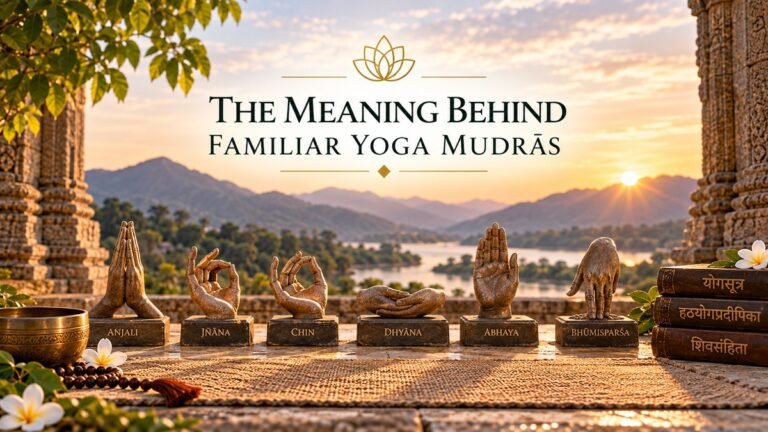
Yoga Mudras represented by familiar hand gestures including Anjali, Jnana, Chin, Dhyana, Abhaya and Bhumisparsha.

The Meaning Behind Familiar Yoga Mudrās

What do familiar yoga mudrās actually mean? Explore Añjali, Jñāna, Chin, Dhyāna, Abhaya and other commonly encountered gestures, while distinguishing traditional contexts, symbolic interpretations and modern yoga explanations.

READ ARTICLE →
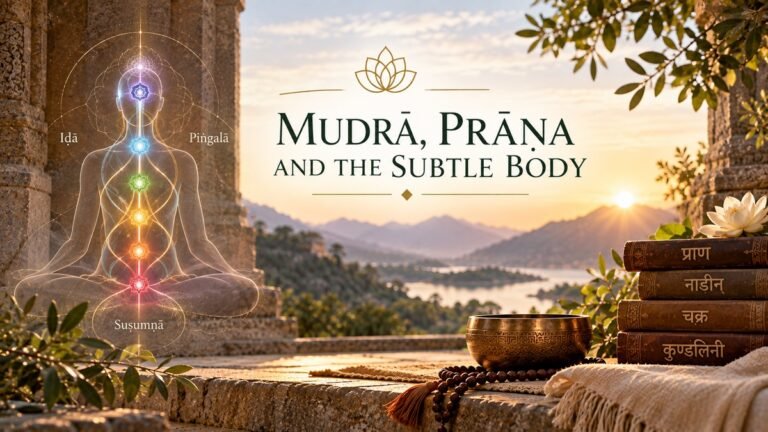
Mudra and Prana illustration representing chakras, nadis and the subtle body within traditional yoga.

Mudrā, Prāṇa and the Subtle Body

Why are mudrās so often described as directing, sealing or containing prāṇa? Explore the traditional subtle-body models behind yogic mudrā, including nāḍīs, cakras, kuṇḍalinī and the central channel — and why these concepts should not be confused with modern biomedical anatomy.

READ ARTICLE →
Hatha Yoga Mudras feature image with traditional yoga texts, mala beads and symbolic objects in a temple setting overlooking mountains.

Beyond the Hands: Mudrā in Haṭha Yoga

In premodern Haṭha Yoga, mudrā could mean far more than a symbolic hand gesture. Practices such as Mahāmudrā, Khecarī Mudrā and Viparītakaraṇī involved the whole body, breath and subtle-body models. Explore what these practices reveal about the historical meaning of mudrā — and why modern hand-mudrā charts tell only part of the story.

READ ARTICLE →
Hasta Mudras represented through meditative hand gestures in a peaceful yoga setting with traditional symbolic elements.

Hasta Mudrās: Understanding the Hand Gestures of Yoga

Hasta mudrās are the hand gestures most people associate with mudrā today, but their meanings are more complex than a chart of finger positions. Explore what hasta mudrās are, how gesture communicates meaning, where familiar forms appear, and how to approach their symbolism and modern interpretations with greater context.

READ ARTICLE →
History of Mudra illustrated through Buddhist and Hindu imagery, hand gestures, temple art and historical manuscripts.

More Than Hand Gestures: The History and Meaning of Mudrā

The history of mudrā is much broader than the familiar hand gestures of modern yoga. Explore what the Sanskrit term means, how mudrās developed across Buddhist, Hindu, Tantric and yogic contexts, and why medieval Haṭha Yoga transformed the idea of the “seal” into sophisticated bodily practices.

READ ARTICLE →
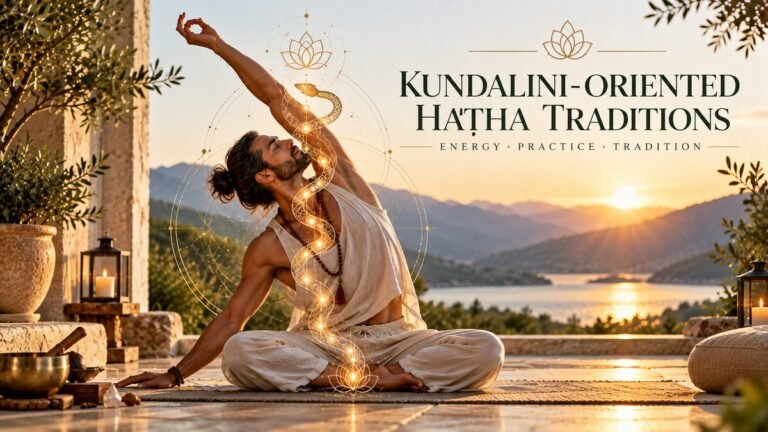
Man practising Kundalini-oriented Haṭha Yoga with symbolic imagery representing kundalini and the subtle body.

Kundalini-oriented Haṭha Traditions: Before Modern Kundalini Yoga

Long before modern Kundalini Yoga, medieval Tantric and Haṭha traditions developed practices concerned with Kuṇḍalinī, prāṇa, nāḍīs, cakras and the subtle body. Explore how these traditions developed, how Kuṇḍalinī entered Haṭha Yoga, and why their history is more complex than the familiar modern seven-chakra model.

READ ARTICLE →
Woman practising SUP Yoga in a low lunge on a stand-up paddleboard on a calm mountain lake.

SUP Yoga: Understanding Yoga on a Stand-Up Paddleboard

SUP Yoga brings yoga practice onto a stand-up paddleboard, where movement, balance, breath and attention respond to a surface that is never completely still. Explore how the practice developed, what happens in a class, how familiar postures change on water, and why paddling competence, weather, equipment and water safety matter.

READ ARTICLE →